
- Details
- 42555
Read more: Impersonation and information theft
powered by social2s

Ask your internet law question



Read more: Impersonation and information theft

Read more: Online defamation and harassment



Harassment by email or texts happens when sending threatening, sexually explicit, indecent or grossly offensive messages. The sending of the email or text does not need to be directed at the intended victim. Sending harassing emails or texts to a third party could constitute the criminal offence and civil wrongdoings of harassment.
Read more: Harassment by email or texts

Generally speaking, pleading with your online harassers is a bad idea. When faced with online harassment, most victims of harassment try what appears at first the most sensible option, which is to plead with your internet troll or harasser to leave you alone.
Read more: How to handle online harassers
Anyone or any company that is a victim of online harassment can bring their own private prosecution to the criminal courts and be protected from harassment immediately. If you have an online harassment case and want to bring it to the criminal courts you should report the harassment to the police. There might however, be cases where you are dissatisfied with the police handling of your case or the slow speed by which matters are moving.
Read more: Private prosecution of harassment
The law should be on the side of the victims of internet harassment but until it catches up, many people are left feeling desperate and helpless. The truth is that reporting and filing a police report for online harassment can be a lengthy, fruitless affair and just leaves victims of online harassment in a deeper campaign of harassment with more complexities and challenges because of the nature of the internet.
Read more: Do police care about online harassment

No one is asked to be harassed on the internet. You could, however, have influence the way your online harassment case is being resolved.
Read more: Outcome of harassment cases

How online harassment offenders react when they have been tracked down, depends on their characteristics and psychological makeup. Internet trolling, in all its variations, is one of the most pervasive forms of online harassment and many of our clients in the public eye and/or use social media accounts for their career have been the targets of these widespread inflammatory, hate-filled trolling campaigns of harassment.
Read more: Internet trolling who does it and why

Read more: Learn about harassment warning

The police in England are likely to decline your initial request to investigate online harassment. This is because the police are lacking the financial and the human resources to investigate harassment on the internet. There is simply too much of it and investigating appears in most cases to be a complex matter.
Read more: How to report harassment to the police

If you have been threatened and abused online and been a target of hate speech, it can make you feel violated and afraid. If it is spreading and finding different expressions across the internet, it can make you feel so out of control and desperate. If you are the one who is being accused of spreading hate speech, you might feel that your human rights and your right to free speech is being violated and as such, you might wish to seek legal advice from a specialist lawyer.
Read more: Hate speech legal advice

Lindsey Goldrick Dean was the subject of a harassment campaign for over 13 years by a man she met just four times. After her release from the hands of her online harasser for over a decade, she came back to the offices of Cohen Davis Solicitors to speak to harassment lawyer specialist Yair Cohen about her case and to provide help and support to other victims of harassment.
Read more: Support for victims of stalking and harassment
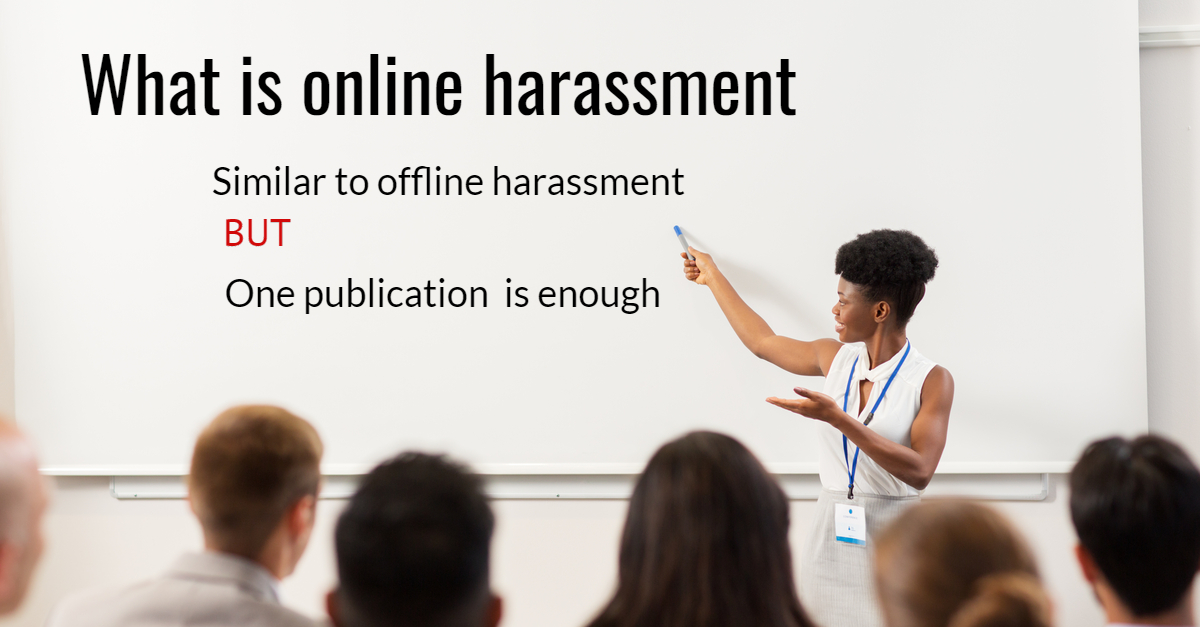
Online harassment is the same thing as offline harassment. It is just that online harassment happens in the virtual world. What is important, from the point of view of the law is how the conduct of the harasser affects the victim.
Read more: Online harassment definition

Why is it that people feel that they can say things about others online that they would not necessarily say to someone’s face. Often, as lawyers, we have to deal with the difficult issue of balancing free speech and online harassment. Sometimes it is very clear who is right or wrong, and which right to free speech or to not feel harassed should be given a priority.
Read more: Free speech and online harassment

Cyberbullying of your child is an absolute nightmare for parents and carers and unfortunately, cyberbullying and harassment in the UK, particularly of children is on the increase. Here is basic cyberbullying advice for parents.
Read more: Cyberbullying advice for parents

Sending a private message without consent could be a crime in the UK. Being harassed by texts is considered as harassment and as such is illegal. The article below provides information about the law relating to sending private messages without the consent of the recipient.


Defamation is highly difficult for most people to handle. The attack on your reputation could be more hurtful than a physical assault and is something that most people find hard to overcome over a lifetime. Social media defamation is the worse type of defamation and to learn how to cope with social media defamation, we need to understand it first.
Read more: Defamation on social media
Case studies